
Understanding what is robinhood worth? is essential for anyone interested in celebrity net worth and wealth. This comprehensive guide covers everything you need to know, from basic concepts to advanced strategies. By the end of this article, you’ll have the knowledge to make informed decisions and take effective action.
Table of Contents
- How Does Robinhood’s Market Cap Compare to Traditional Brokerages?
- What’s Driving Robinhood’s Current Valuation?
- Why Has Robinhood Stock Been Volatile Recently?
- What Do Analysts Think Robinhood Is Worth?
- Is Robinhood Overvalued at Current Prices?
- How Has Robinhood’s International Expansion Affected Its Worth?
- What Could Change Robinhood’s Valuation Going Forward?
- Conclusion
How Does Robinhood’s Market Cap Compare to Traditional Brokerages?
Robinhood’s $80-82 billion valuation places it in elite company among financial services firms, though it remains smaller than legacy giants like Charles Schwab. What makes this figure notable is how quickly Robinhood achieved it. The company reached this tier by capturing a demographic that traditional brokerages largely ignored: younger, mobile-first investors who wanted simple access to stocks and cryptocurrency without paying commissions per trade. The company’s growth trajectory tells a compelling story. Starting 2025 at a market cap of $32.94 billion, Robinhood ended the year at $101.70 billion””more than tripling in twelve months.
This growth was fueled by a booming cryptocurrency market, consistently strong earnings reports, and an expanding user base that continued to flock to the platform. At its January 2026 peak, the market cap reached $105.67 billion before retreating amid broader market pressures. However, comparing Robinhood’s valuation to traditional brokerages requires some caution. Unlike established firms with decades of assets under management and diversified revenue streams, Robinhood’s worth is heavily tied to trading activity and crypto market conditions. When Bitcoin weakens or trading volumes decline, as they have in recent weeks, Robinhood’s stock feels the pressure disproportionately. The roughly 6.52% decline over the past 30 days illustrates this sensitivity.

What’s Driving Robinhood’s Current Valuation?
Several factors converge to explain Robinhood’s current worth. The cryptocurrency boom of 2025 served as a primary catalyst, with retail investors flocking to the platform to trade digital assets during the bull run. Robinhood’s ability to offer crypto alongside traditional equities in a single, user-friendly app gave it a competitive advantage that translated directly into revenue growth and, subsequently, stock price appreciation. Strong earnings reports throughout 2025 reinforced investor confidence. Each quarter seemed to exceed expectations, demonstrating that Robinhood had moved beyond its meme-stock era reputation and was building a sustainable business.
The company’s international expansion plans, including the UK launch of a stocks and shares ISA with zero platform fees, signal ambitions beyond the American market. Recent reports suggest the U.S. government may tap Robinhood to help oversee new children’s investment accounts dubbed “Trump accounts,” which could open an entirely new revenue stream and user demographic. While details remain sparse, such a partnership would represent a significant vote of confidence in Robinhood’s infrastructure and could drive the next leg of growth. That said, regulatory partnerships come with their own complexities and compliance costs that shouldn’t be overlooked.
Why Has Robinhood Stock Been Volatile Recently?
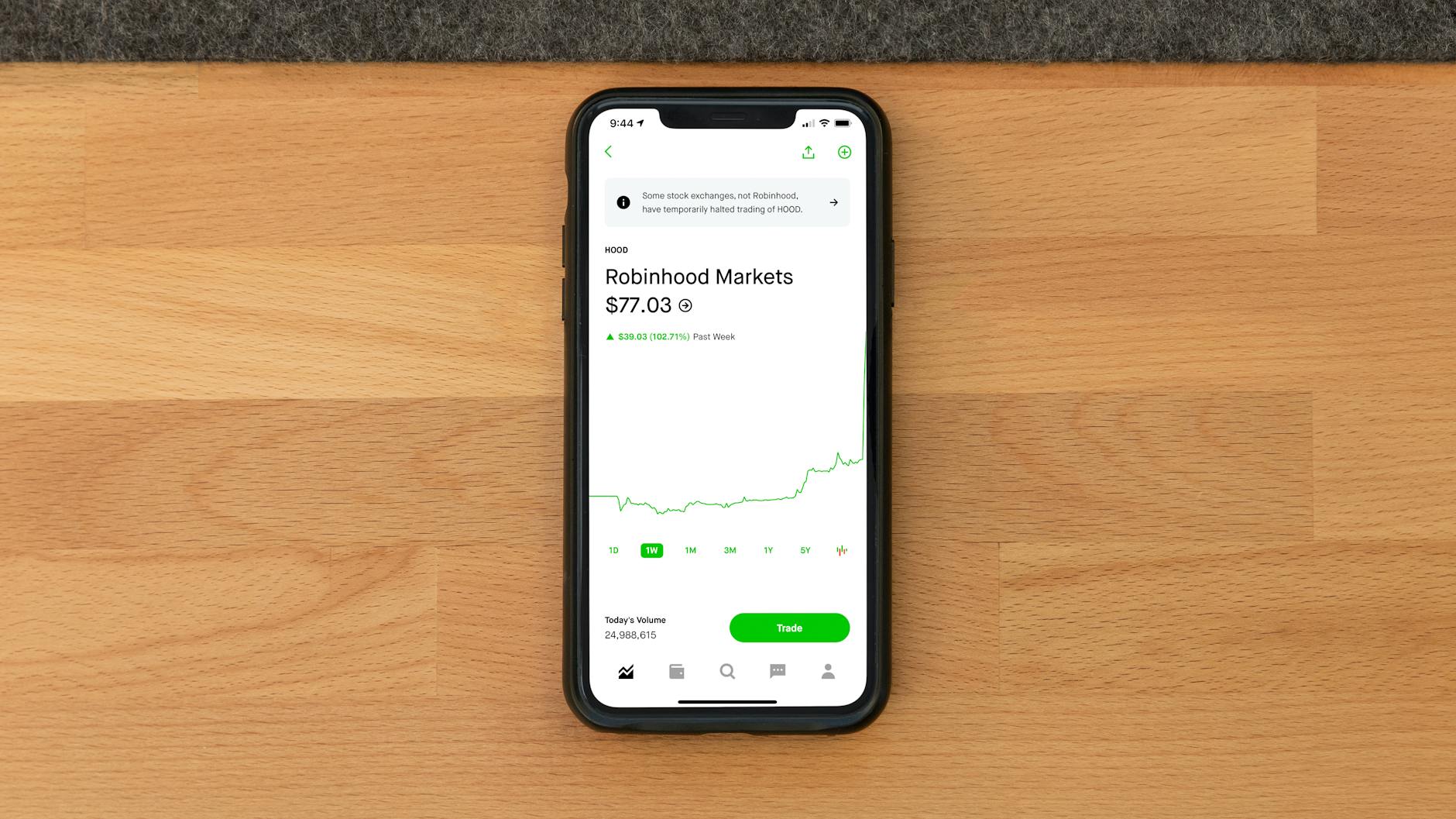
Despite its impressive 2025 performance, Robinhood’s stock has experienced significant turbulence in early 2026. After reaching nearly $105.67 billion in market cap during mid-January, the company has seen its value decline by approximately 6.52% over the past 30 days. The current price of $90.30 sits well below the all-time high of $152.46, representing a pullback of roughly 40% from peak levels. The primary culprit is Bitcoin weakness and declining crypto trading volumes. Robinhood earns revenue when users trade, and cryptocurrency transactions have been particularly lucrative.
When the crypto market cools, Robinhood’s transaction-based revenue declines accordingly. This creates a feedback loop where crypto volatility amplifies Robinhood’s own stock movements, making it a higher-beta investment than many traditional financial services companies. For investors, this volatility presents both opportunity and risk. The 52-week range of $29.66 to $153.86″”a spread of more than $124″”demonstrates just how wildly the market’s perception of Robinhood’s worth can shift. Those who bought near the bottom quintuple their investment at the peak; those who bought at the top are sitting on substantial paper losses. Timing matters enormously with this stock.
What Do Analysts Think Robinhood Is Worth?
Wall Street analysts have reached a consensus “Buy” rating on Robinhood, based on assessments from 21 analysts as of late January 2026. The average price target sits at $134.38, implying significant upside from the current trading price of around $90. If analysts prove correct, Robinhood’s market cap could climb back toward the $100 billion threshold it briefly exceeded. The bullish case rests on continued user growth, successful international expansion, and potential new revenue streams like the government partnership reports. Analysts point to Robinhood’s ability to acquire customers at relatively low cost and its sticky platform that keeps users engaged across multiple asset classes.
The UK launch of commission-free ISA accounts could replicate the company’s American success in a new market. However, not all analysts share this optimism equally. Some express concern about Robinhood’s elevated valuation metrics. The current P/E ratio of approximately 41.30 means investors are paying more than 41 times earnings for each share. The price-to-sales ratio of 23 looks particularly stretched compared to Robinhood’s five-year average of 7. These numbers suggest the stock is priced for perfection, leaving little room for execution missteps or market disappointments.
Is Robinhood Overvalued at Current Prices?
The question of whether Robinhood is overvalued depends largely on one’s view of the company’s growth trajectory. Bulls argue that the elevated multiples are justified by Robinhood’s expansion potential, unique market position, and ability to capture younger investors who will accumulate wealth over coming decades. Bears counter that the current valuation assumes a level of growth that may prove difficult to sustain, particularly if crypto enthusiasm wanes. Consider the math: at a P/E of roughly 44 (some calculations put it slightly higher than the 41.30 figure), Robinhood would need to grow earnings substantially just to “grow into” its current valuation. If earnings stagnate or decline due to reduced trading activity, the stock could face significant multiple compression even without any fundamental business problems.
The price-to-sales ratio of 23 versus a historical average of 7 underscores this risk. A practical comparison helps illustrate the point. Traditional brokerages and banks typically trade at single-digit P/E ratios and low price-to-sales multiples. Robinhood commands a premium because investors view it as a growth company rather than a mature financial institution. That premium only holds if growth continues to materialize. If Robinhood’s expansion stalls, its valuation could compress toward industry norms, potentially cutting the stock price significantly.

How Has Robinhood’s International Expansion Affected Its Worth?
Robinhood’s push into international markets represents a meaningful driver of its current valuation and future prospects. The UK launch of a stocks and shares ISA product with zero platform fees and no commissions directly mirrors the strategy that made Robinhood dominant among American retail investors. By offering cost savings that traditional UK brokers cannot match, Robinhood aims to capture market share quickly.
For example, British investors who currently pay annual platform fees of 0.25% to 0.45% at established providers could save hundreds of pounds annually by switching to Robinhood. On a £50,000 portfolio, even a modest 0.3% fee translates to £150 per year in savings. This value proposition proved irresistible to American investors, and Robinhood is betting it will resonate similarly abroad.
What Could Change Robinhood’s Valuation Going Forward?
Several factors could materially shift Robinhood’s worth in either direction over the coming months. A sustained cryptocurrency rally would likely boost trading volumes and revenue, potentially pushing the stock back toward its all-time highs. Conversely, a prolonged crypto winter could pressure both the top line and the stock price, particularly given how much of Robinhood’s recent growth tied to digital asset trading.
Regulatory developments also loom large. The potential government partnership for children’s accounts could open new markets, but increased regulatory scrutiny of payment for order flow or crypto offerings could create headwinds. Robinhood has faced regulatory challenges before, and the outcome of any new investigations or rule changes could swing the valuation significantly. Investors should monitor these developments closely.
Conclusion
Robinhood’s current worth of $80-82 billion reflects both remarkable growth and substantial expectations. The company tripled its market cap during 2025, reaching as high as $105.67 billion, driven by cryptocurrency trading, strong earnings, and continued user acquisition. At around $90.30 per share, the stock offers potential upside to analyst targets near $134 while carrying risks tied to elevated valuation metrics and crypto market sensitivity.
For those considering an investment, the key question is whether Robinhood can sustain its growth trajectory. The company has proven skeptics wrong before, transforming from a meme-stock casino into a legitimate financial services player. But with a P/E above 40 and a price-to-sales ratio more than three times its historical average, the margin for error is thin. The next year will likely determine whether Robinhood’s current valuation represents fair value for a generational fintech company or an overextended bet on continued momentum.